
Person using a TENS unit on their arm with a computer monitor displaying data in the background.

Athletic Training

Home / Athletic Training

Biofeedback Device for Athletic Training

Athletes can benefit greatly from a biofeedback device for athletic training, such as the mTrigger Biofeedback System. sEMG biofeedback helps monitor athletic training to help athletes train for improved performance.

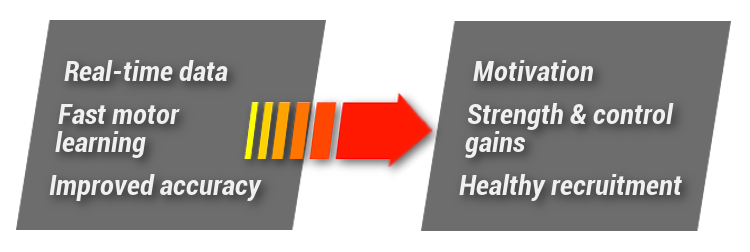
Assess and monitor your athletes from strength training to injury prevention and return to sport metrics. Trainers can easily diagnose muscle activation and recruitment issues in their athletes by observing sEMG data through the mTrigger app. mTrigger provides real-time data during exercise, meaning trainers can more effectively train target muscles to improve their athletes’ performance.

Biofeedback training offers the following benefits:


You’re in control

Using sEMG biofeedback systems such as mTrigger for athletic training and recovery provides the means to achieve deeper understanding and control of the body. Tap into your athletes’ motivation and motor learning with visual rewards and gamification of exercise. With sEMG biofeedback data relaying real-time muscle activation, athletes and trainers can see where improper activation or deficits are affecting performance and better formulate training programs for success.

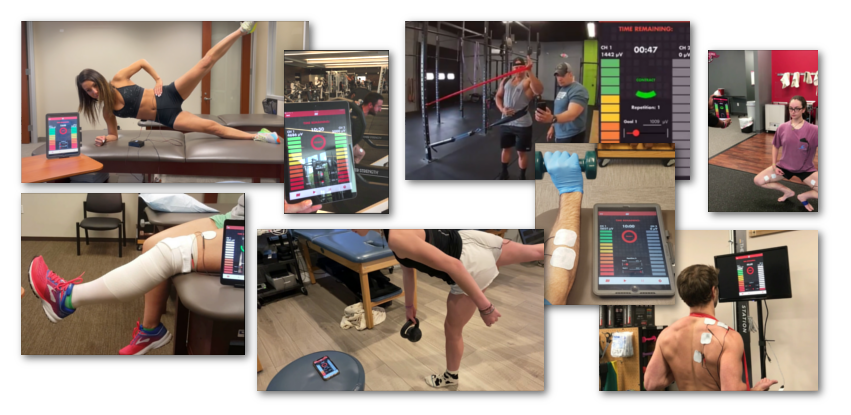
The mTrigger biofeedback device is incredibly portable, utilizing an app and electrodes to provide a visual representation of neuromuscular activity. Whether you are utilizing biofeedback during an outdoor training session, in the locker room or gym, or at a hotel room on the road, our system is easy to bring along and hook up to any mobile device. Whatever day or occasion, you can be sure you have the tools to assess your athlete’s capabilities—and help them train effectively—wherever you are.

With mTrigger, trainers have a tool to optimize performance for their athletes. Build strength and volitional control that have long lasting functional effects. Make adjustments to therapeutic exercise programs and strength and conditioning to get fast, safe resultsReach out to our team of experts to learn more about our biofeedback device for athletic trainers and how the mTrigger Biofeedback System might benefit your team.

Upper Extremity & SPine

Discover how athletic trainers can greatly accelerate recovery, enhance motivation, and improve outcomes in upper-extremity and spine rehab

Lower Extremity

Learn how athletic trainers can use mTrigger to elevate lower-extremity rehab, from restoring gait mechanics to accelerating ACL and ankle recovery with precision and engagement.

Ankle Sprains

See how mTrigger transforms ankle sprain rehab by boosting stability, engagement and compliance, while making each rep purposeful and every recovery milestone visible.

Shoulder Impingement

Explore how mTrigger can retain scapular muscle timing and activation, while improving motion, reducing pain, and restoring overhead function.

Knee Injuries

Follow a real case study how mTrigger guided a young athlete through complex knee rehab, from MPFL reconstruction to OCD microfracture and reinjury, to build quad activation, restore control, and safely return to sport.

References


Peinado-Molina, R. A., Hernández-Martínez, A., Martínez-Vázquez, S., Rodríguez-Almagro, J., & Martínez-Galiano, J. M. (2023)
. Pelvic floor dysfunction: prevalence and associated factors.BMC Public Health, 23, 2005. https://pmc.ncbi.nlm.nih.gov/articles/PMC10576367

Wu et al. 2021
: Electromyographic Biofeedback for Stress Urinary Incontinence or Pelvic Floor Dysfunction in Women — a systematic review and meta‑analysis including RCTs and non-RCTs, showing that adding EMG‑biofeedback to PFMT
modestly improved cure rates and muscle strength, though studies were heterogeneous and mainly from China.

BMC Women's Health 2023
: Biofeedback for physiotherapist feedback postpartum — systematic review of RCTs from
2012–2022, concluding moderate-to-strong evidence supporting biofeedback-guided training to aid recovery of urinary and anal continence postpartum, based on effect sizes and clinically relevant outcomes.

Sciarra et al. 2021
: Biofeedback-guided programs after radical prostatectomy — meta‑analysis in men showed faster return to pad-free continence and reduced pad weight when PFMT was biofeedback-guided versus PFMT
alone across 1‑ to 12‑month follow‑up.

Berghmans et al. 1996
: Early RCT pooled in meta-analysis found that PFMT with biofeedback doubled odds of cure (OR ≈ 2.1), though confidence interval crossed unity.

Wang et al. 2024
: Pressure‑mediated biofeedback with PFMT—a JAMA Network Open RCT (2024) in women with stress urinary incontinence, showing improved outcomes on pad tests, leakage, and strength versus control interventions.

Wagner B, Steiner M, Huber DFX, Crevenna R.
The effect of biofeedback interventions on pain, overall symptoms, quality of life and physiological parameters in patients with pelvic pain : A systematic review. Wien Klin Wochenschr. 2022 Jan;134(Suppl 1):11-48. doi: 10.1007/s00508-021-01827-w. Epub 2021 Mar 22. PMID: 33751183; PMCID: PMC8825385.

Koh CE, Young CJ, Young JM, Solomon MJ.
Systematic review of randomized controlled trials of the effectiveness of biofeedback for pelvic floor dysfunction. Br J Surg. 2008 Sep;95(9):1079-87. doi: 10.1002/bjs.6303. PMID: 18655219.

Hite M, Curran T.
Biofeedback for Pelvic Floor Disorders. Clin Colon Rectal Surg. 2021 Jan;34(1):56-61. doi: 10.1055/s-0040-1714287. Epub 2020 Sep 4. PMID: 33536850; PMCID: PMC7843943.

Heymen S, Scarlett Y, Jones K, Ringel Y, Drossman D, Whitehead WE.
Randomized, controlled trial shows biofeedback to be superior to alternative treatments for patients with pelvic floor dyssynergia-type constipation. Dis Colon Rectum. 2007 Apr;50(4):428-41. doi: 10.1007/s10350-006-0814-9. PMID: 17294322.

Rao SS, Valestin J, Brown CK, Zimmerman B, Schulze K.
Long-term efficacy of biofeedback
therapy for dyssynergic defecation: randomized controlled trial. Am J Gastroenterol. 2010 Apr;105(4):890-6. doi: 10.1038/ajg.2010.53. Epub 2010 Feb 23. PMID: 20179692; PMCID: PMC3910270.

Gadel Hak N, El-Hemaly M, Hamdy E, El-Raouf AA, Atef E, Salah T, El-Hanafy E, Sultan A, Haleem M, Hamed H.
Pelvic floor dyssynergia: efficacy of biofeedback training. Arab J Gastroenterol. 2011 Mar;12(1):15-9. doi: 10.1016/j.ajg.2011.01.001. Epub 2011 Feb 24. PMID: 21429449.

Wagner B, Steiner M, Huber DFX, Crevenna R.
The effect of biofeedback interventions on pain, overall symptoms, quality of life and physiological parameters in patients with pelvic pain : A systematic review. Wien Klin Wochenschr. 2022 Jan;134(Suppl 1):11-48. doi: 10.1007/s00508-021-01827-w. Epub 2021 Mar 22. PMID: 33751183; PMCID: PMC8825385.

Wu, X., Zheng, X., Yi, X.
et al. Electromyographic Biofeedback for Stress Urinary Incontinence or Pelvic Floor Dysfunction in Women: A Systematic Review and Meta-Analysis. Adv Ther 38, 4163–4177 (2021). https://doi.org/10.1007/s12325-021-01831-6

Höder, A., Stenbeck, J., Fernando, M.
et al. Pelvic floor muscle training with biofeedback or feedback
from a physiotherapist for urinary and anal incontinence after childbirth - a systematic review. BMC Women's Health 23, 618 (2023). https://doi.org/10.1186/s12905-023-02765-7 

Weatherall M.
Biofeedback or pelvic floor muscle exercises for female genuine stress incontinence: a meta-analysis of trials identified in a systematic review. BJU Int. 1999 Jun;83(9):1015-6. doi: 10.1046/j.1464-410x.1999.00091.x. PMID: 10368247.

Nunes EFC, Sampaio LMM, Biasotto-Gonzalez DA, Nagano RCDR, Lucareli PRG, Politti F.
Biofeedback for pelvic floor muscle training in women with stress urinary incontinence: a systematic review with meta-analysis.
Physiotherapy. 2019 Mar;105(1):10-23. doi: 10.1016/j.physio.2018.07.012. Epub 2018 Sep 24. PMID: 30686479.